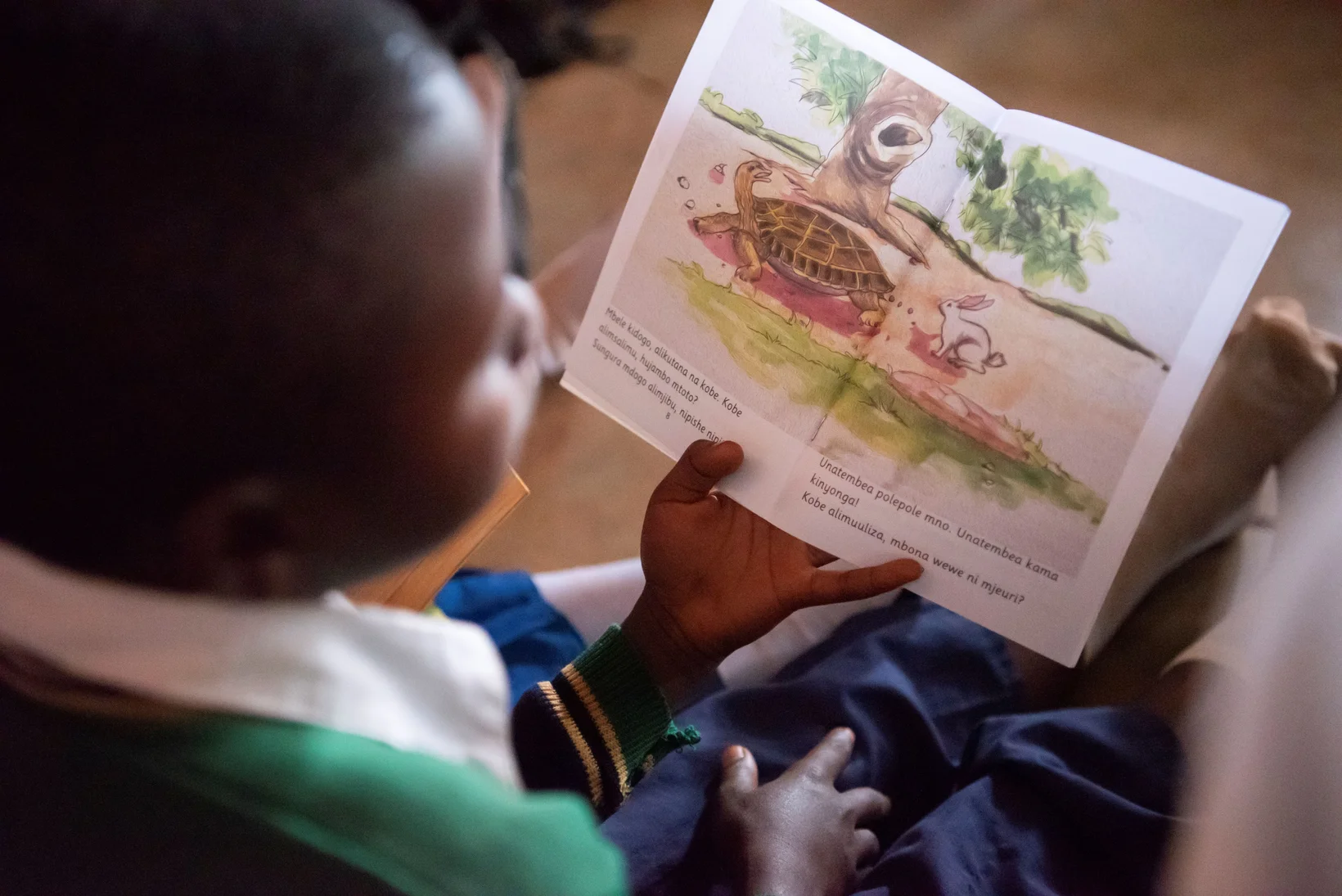
The Tanzanian organisation Community Aid and Social Education Empowerment (CASEE) has won the Pestalozzi Children’s Village Foundation’s Innovation Fund 2026. With its project ‘Mobile Bridge Learning for Hadzabe Children’, it aims to open up new ways of learning for children from the Hadzabe community and make it easier for them to attend school.
Ten organisations from South-Eastern Europe, South-East Asia and East Africa had submitted projects for this year’s Innovation Fund. The award went to CASEE from Tanzania for its project ‘Mobile Bridge Learning for Hadzabe Children’.
The project is aimed at children of the Hadzabe, a semi-nomadic community in Tanzania. Many of them have no access to (early childhood) education, attend school irregularly or drop out early. Through mobile learning programmes, CASEE aims to overcome barriers to education such as long journeys to school, language barriers or cultural differences.
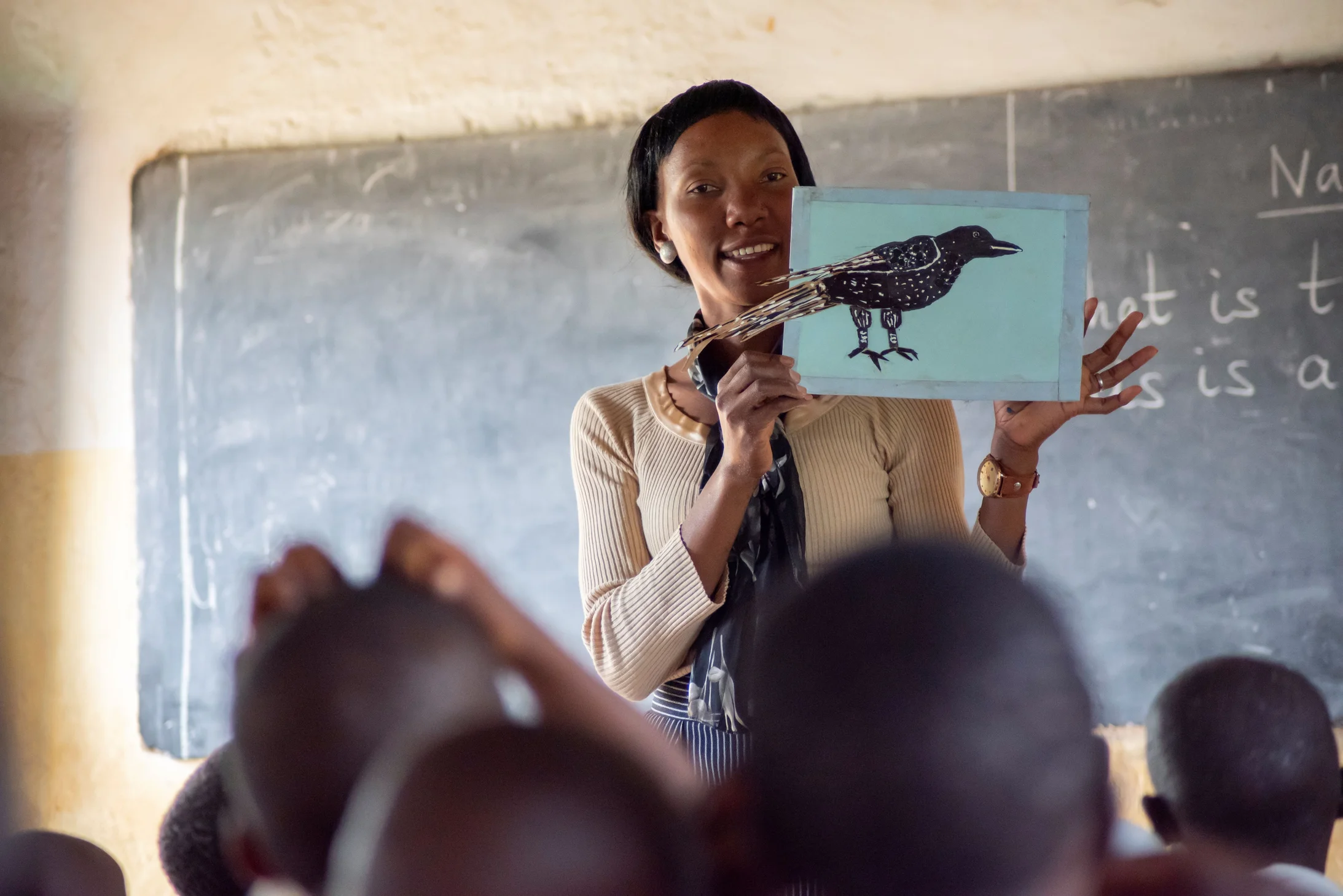
Culturally embedded, mobile learning
For the jury, it was above all the innovative approach that tipped the balance: rather than expecting the Hadzabe to adapt to existing educational structures, the project brings learning opportunities directly into the community. Playful, culturally appropriate learning methods are designed to facilitate access to school and raise families’ awareness of the importance of education, without calling the traditional way of life into question.
The jury was particularly impressed by the fact that the project reaches one of Tanzania’s most marginalised communities and does not view education as being at odds with the traditional way of life. It creates new avenues for Hadzabe children to access their right to education whilst respecting their cultural identity.
Furthermore, close cooperation with local authorities provides a solid foundation for the sustainable implementation and subsequent scaling up of the approach. The consistent consideration of gender and inclusion issues, as well as the project team’s strong commitment during the presentation, were also viewed positively in the assessment.
From prototype to potential scaling
As a first step, CASEE will trial the mobile learning model in one local authority for five months. The insights gained from this will be directly incorporated into the further development of the approach. The project will then be extended to three local authorities during a seven-month trial phase.
The aim is to investigate how many children make use of the learning programmes, how their learning potential develops, and whether more children are able to enrol in school or continue their education. The results are expected to provide important insights into how mobile learning programmes can effectively reach disadvantaged children.
Innovation project from Ethiopia: a multilingual toolkit for climate education
This external content is currently hidden. If you wish to enable it, press the button below.
I agree to display content from external services. They may receive and store personal data. See our privacy policy for more information