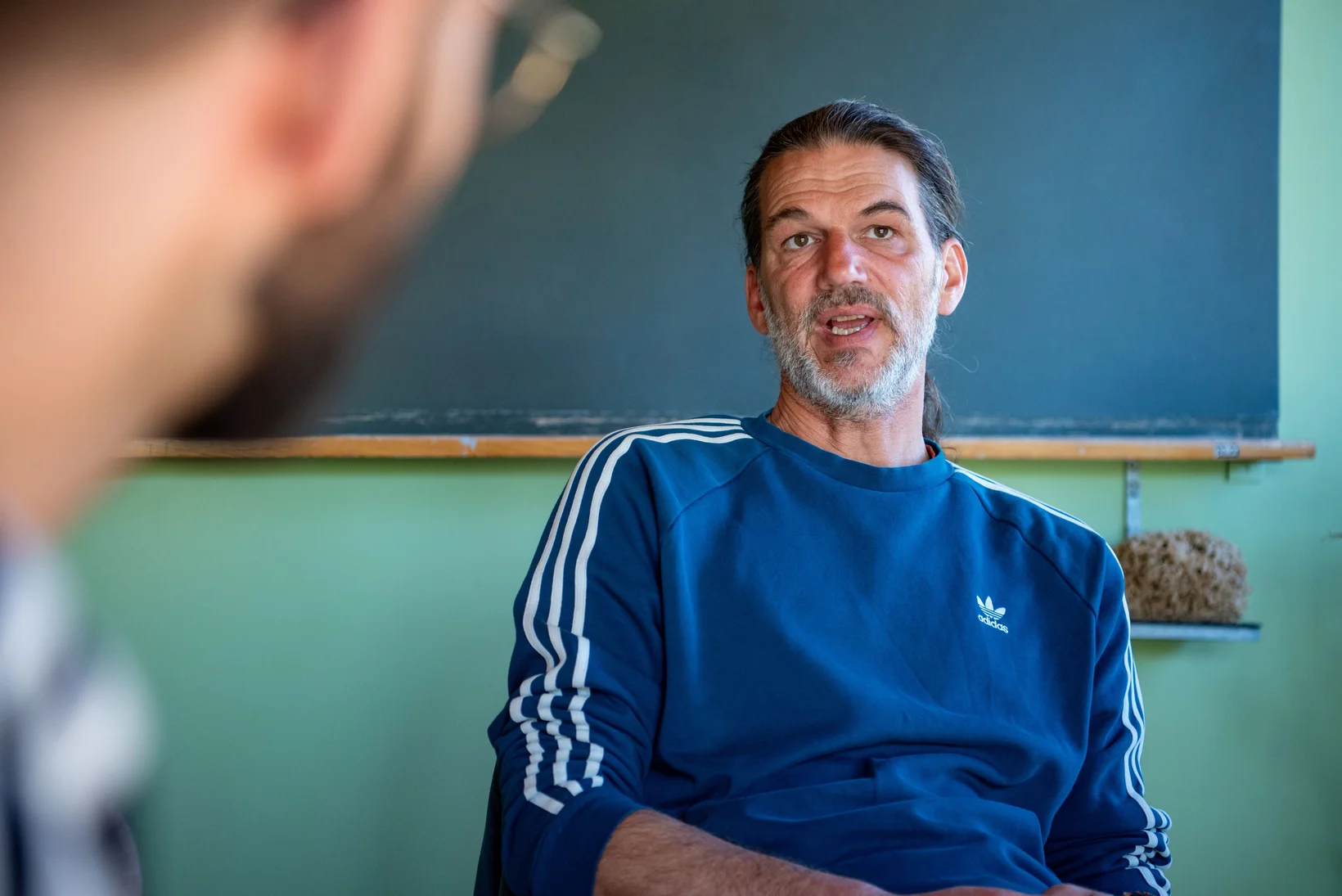
Twelve years ago, the Pestalozzi Children’s Foundation closed its last residential home. Since then, no children or young people have lived permanently in Trogen. Nevertheless, the Children’s Village remains a vibrant centre for educational work, where young people from all over the world come together. Damian Zimmermann, Head of Education and a member of the Executive Board, explains how the Children’s Village’s work has developed over the last years and where the focus lies today.
No children have been living permanently in the children’s village since 2014. What approaches does the Pestalozzi Children’s Foundation take to its educational work today?
The projects we run today have a long history. Many have been running since the 1990s. Even back then, school classes would visit us to learn outside the regular school curriculum. With the end of permanent residential accommodation, we have expanded these existing programmes and focused our resources specifically on educational provision.
“Children’s rights, intercultural education and the active participation of children and young people are at the heart of this.”
How have the projects – such as themed project weeks, media literacy projects or exchange programmes – developed over the years?
The development of our educational programmes is always guided by the needs of children, young people and schools. During our themed project weeks, pupils explore key social issues, reflect on their own viewpoints and develop practical skills.
In our media literacy projects, we teach pupils how to use media effectively and help them develop the ability to make sense of the daily deluge of information. Our international exchange programmes, meanwhile, bring young people from different countries together and foster intercultural understanding of other ways of life.
This external content is currently hidden. If you wish to enable it, press the button below.
I agree to display content from external services. They may receive and store personal data. See our privacy policy for more informationAs our resources grew, we were able not only to carry out more projects, but also to reach more children and young people. At the start of the new millennium, mobile projects were introduced: thanks to the radio buses operated by our in-house service, powerup_radio, projects can be carried out directly in schools, enabling us to reach people throughout Switzerland even more directly.
At the same time, digital media are having a greater influence: we have therefore stepped up our work in media education to help children and young people to critically examine content and integrate media constructively into their lives.”
‘Intercultural understanding is deeply ingrained in our DNA.’
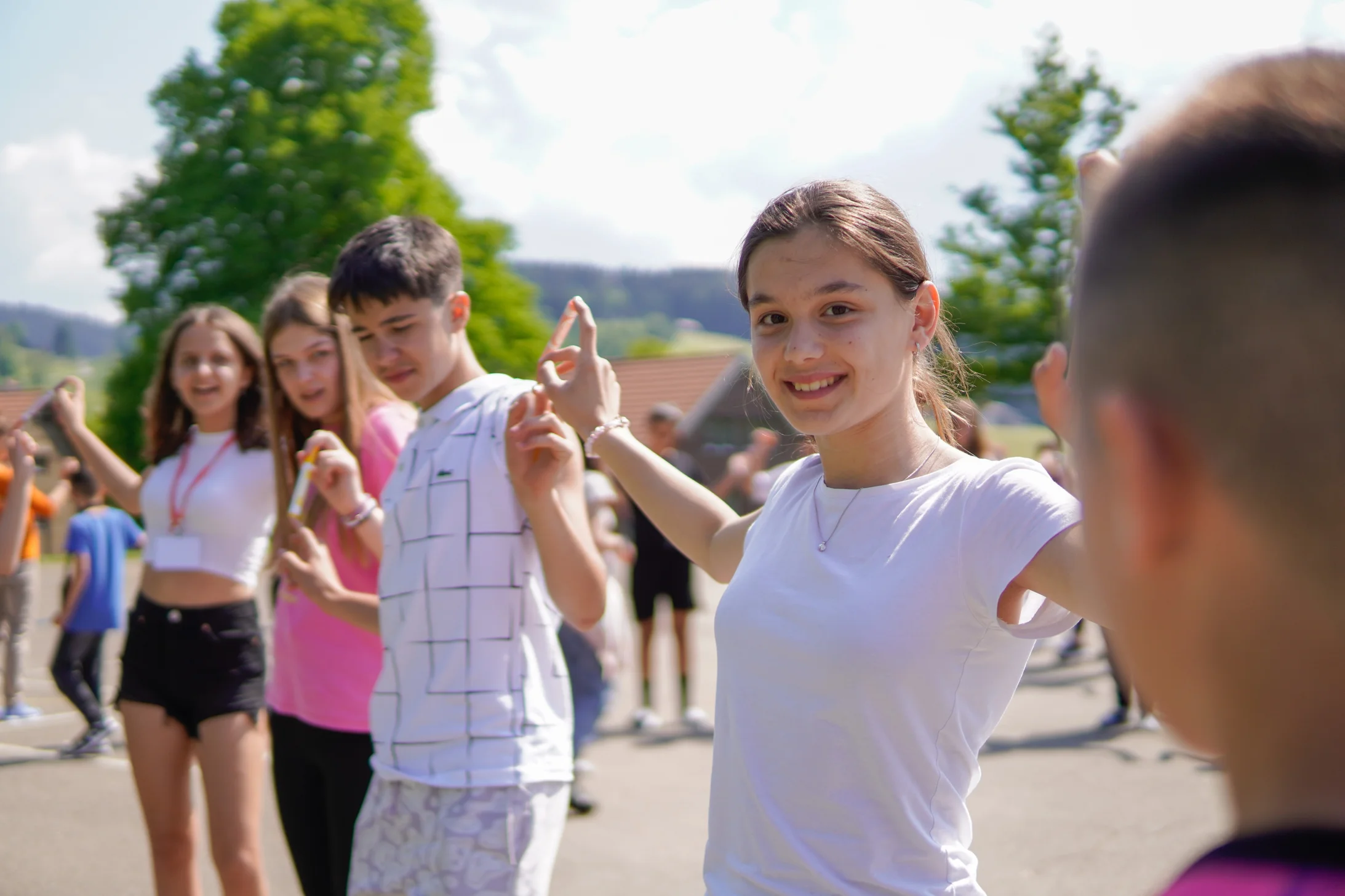
At the same time, the Children’s Village is placing greater emphasis on intercultural understanding, global learning and education for democracy. What has prompted this?
The transformation began with a strategy to harmonise the content of our programmes and to develop targeted educational offerings. Intercultural understanding is deeply embedded in our DNA. It helps young people to understand themselves and other cultures.
Global learning complements this approach by empowering children and young people to reflect critically on global issues and recognise their role in an interconnected world. Democracy education, on the other hand, is a relatively new field that we have been specifically developing over recent years.
The aim is for young people to know their rights, to make their voices heard and to play an active part in societal processes. All these key areas are designed to empower young people to act responsibly and with self-confidence in a complex world.”
Why are education on children’s rights, media literacy and intercultural education particularly valuable, both now and in the past?
Young people are growing up in an era characterised by uncertainty and rapid change. Every day, they are confronted with a wealth of information, differing perspectives and global developments.
Children’s rights provide them with guidance and security; media literacy helps them make sense of this deluge of information; and intercultural education fosters an understanding of different realities of life.
In this way, they learn to develop their own viewpoints, take other perspectives into account and take responsibility in living together – essential skills for a democratic society.
“Many former participants still say, years later, that their experiences at the children’s village were life-changing.”
This external content is currently hidden. If you wish to enable it, press the button below.
I agree to display content from external services. They may receive and store personal data. See our privacy policy for more informationHow can we tell that the experiences in the children’s village are having an impact?
Measuring the impact of education in all its facets presents a major challenge. However, the impact of our projects is evident at various levels.
In qualitative terms, feedback from teachers, support staff and the young people themselves provides insight: children feel valued by us, develop their own attitudes and participate actively in school and the community. Quantitatively, we measure these effects through post-project surveys, feedback forms and long-term studies.
What we hear time and again is that the children have felt particularly valued and empowered whilst with us. Not only in terms of their educational or career paths, but also in that they actively apply the skills acquired in the children’s village to social engagement and within their local communities.

“Whether it is through promoting children’s rights, fostering intercultural understanding or encouraging democratic participation: we want to empower young people to play an active part in society and take responsibility for a peaceful future.”
How does the Children’s Village adapt its educational work to the ever-changing lives of young people?
We respond to social developments and technological changes. In addition to school classes and local projects, we offer digital formats such as digitalstreetwork.ch, a pilot project on digital youth work that is unique in Switzerland.
Adult education is also becoming increasingly important to us: teachers, social workers and organisations are involved in order to promote sustainable learning processes.
To what extent do new initiatives such as the Peace Education and Empowerment Summit build on the vision of its founder, Walter Robert Corti?
All our educational projects are guided by Corti’s vision: a peaceful, united and sustainable world.
At the same time, Corti’s approach is always linked to the idea that committed adults and reliable networks help to realise this vision. As early as 1946, when the children’s village was founded, those involved were closely connected and provided both professional and visionary support.
This aspect – strong support from adults and a robust network – remains central to this day and is continued and reinforced through educational projects such as the Peace Education and Empowerment Summit.