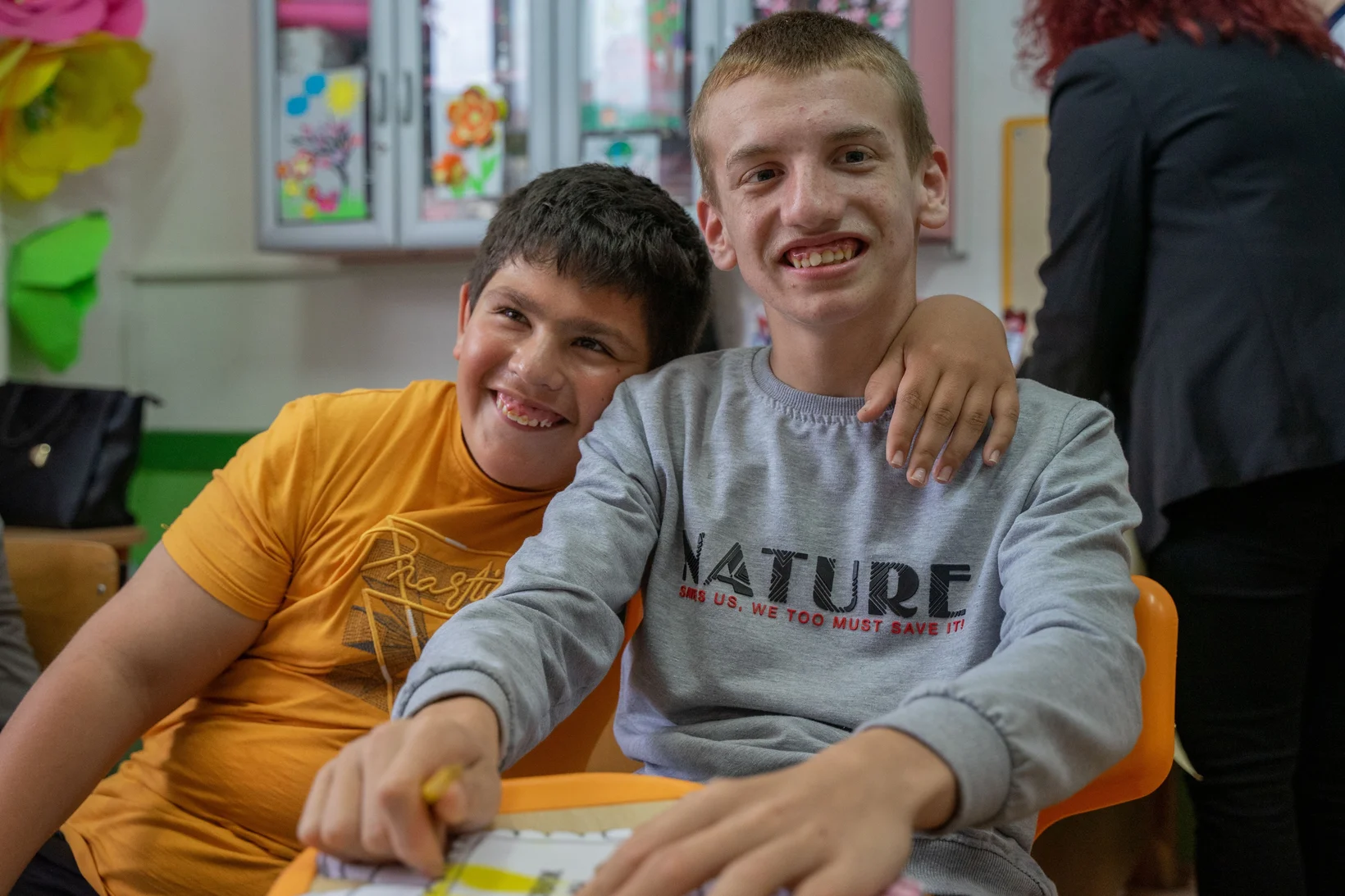
The inclusion of children with special educational needs. That is the overarching aim of our project in North Macedonia.
In 2025, we worked at various levels to ensure that children with special needs have access to high-quality education in mainstream schools:
- training for teachers on child-centred approaches, the development of individual
- support plans and the use of assistive technologies
- Individual support from qualified teachers specialising in child-centred approaches
- Adapted learning materials
- Individualised education plans
- Teaching aids and assistive technologies
- Strengthening cross-sectoral cooperation regarding the identification and enrolment of out-of-school children
- Training of future teachers: collaboration with faculties of education to integrate inclusive education into the training
of trainee teachers - Close collaboration at the policy level with the relevant authorities to further develop the policy framework for inclusive education
Nationwide impact
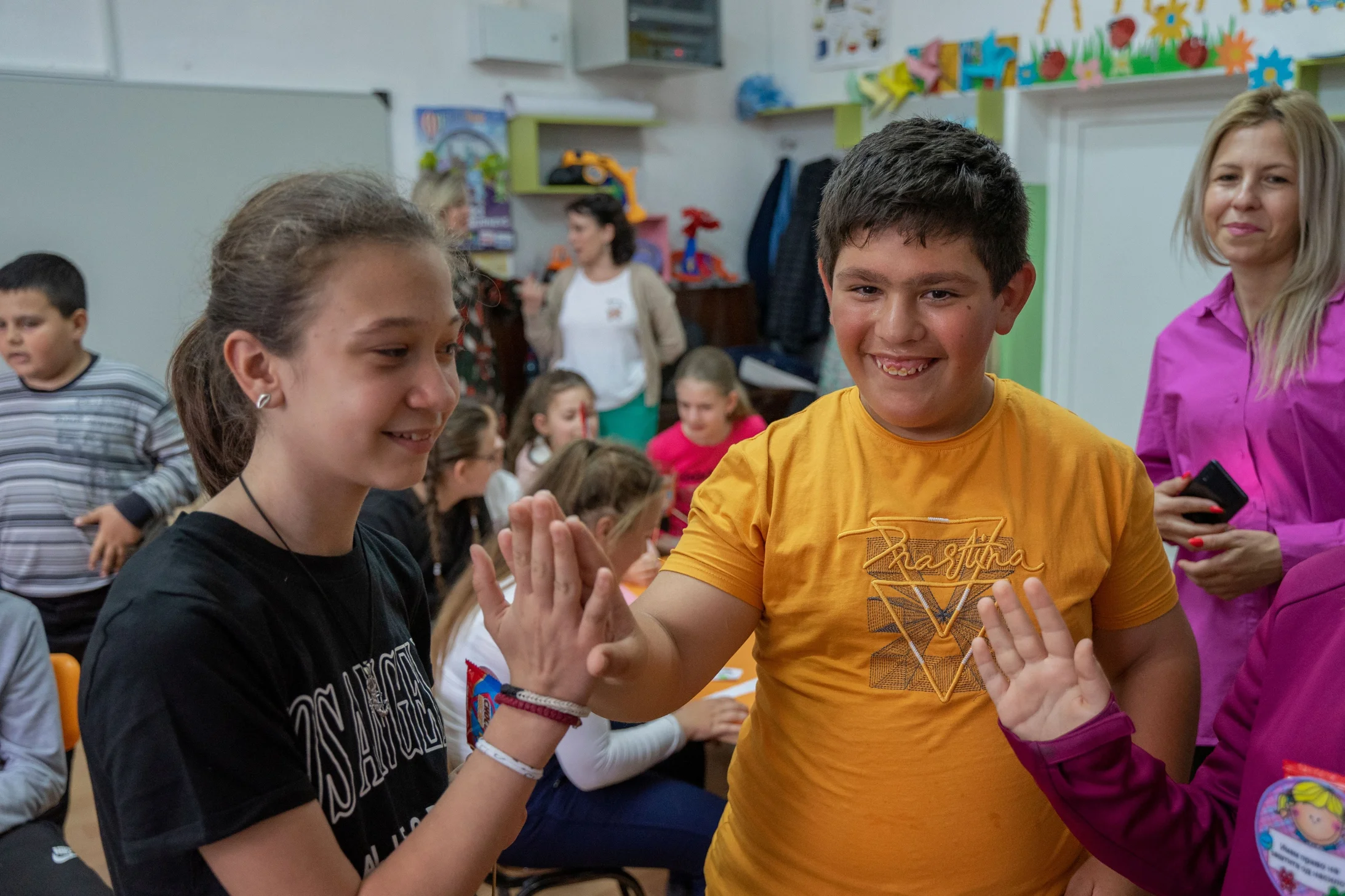
Thanks to the support provided, children with special educational needs are showing a steady improvement in their academic results. For example, in 2025, the average mark for these pupils rose by 1.42 per cent compared with the previous academic year. A total of 88 children who were not attending school were identified and enrolled in the education system for the first time at the start of the 2025/26 academic year.
Together with the national education authority, we developed a comprehensive framework for inclusive education, as well as binding standards and indicators. For the first time, the new monitoring indicators establish a clear distinction between the roles of the resource centres and those of mainstream schools.
In addition, we have drawn up and introduced guidelines and practical tools for the resource centres. This has enabled standards to be formally established and quality development to be strengthened in the long term.